A septic tank doesn't fill up like a bucket — it fills with sludge and scum that the drain field can't take. Pumping removes that accumulated layer before it carries over into the field lines, where it clogs the soil pores and starts the slow death of your drain field. Most Schertz households need pumping every 3 to 5 years, but heavy water use, garbage disposals, and large families shorten that interval fast.
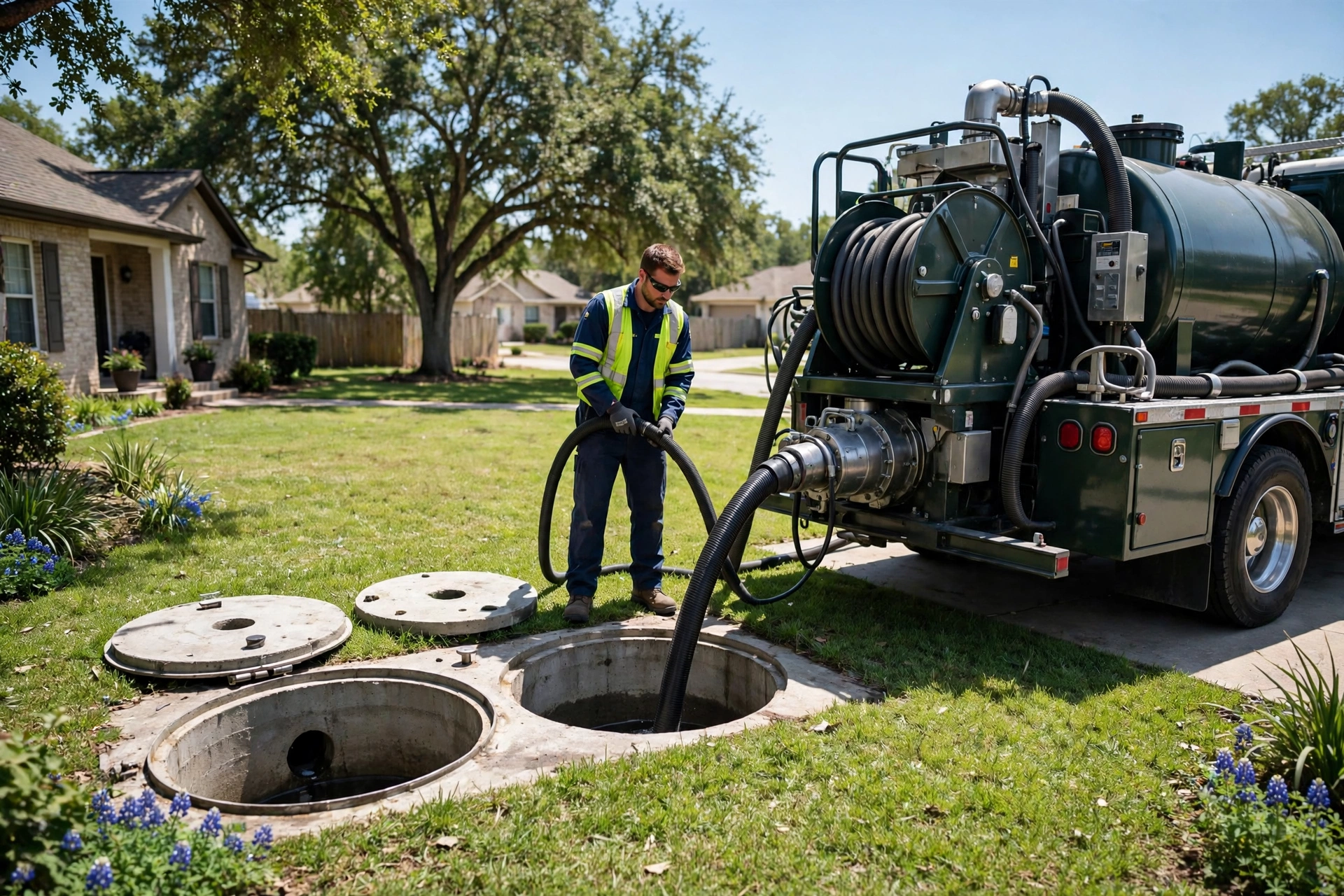
Our pumping service is thorough, not just a quick pump-and-go. We pump both compartments of the tank, inspect the baffles and tees while we're in there, check the sludge level against the tank's capacity, and look for the warning signs — root intrusion, cracked lids, deteriorating baffles — that turn into expensive repairs later. You get a straight report on what we found and an honest recommendation on your next pump-out date.
If it's been more than a few years since your last pump-out, or your drains are slowing down and you can't remember when the tank was last serviced, call. Pumping on schedule is the cheapest septic service there is — and skipping it is the most expensive mistake.
Signs your septic tank needs pumping
- It's been 3+ years since the last pump-out (or you don't know when it was)
- Multiple drains slowing down at the same time
- Gurgling sounds from toilets or drains after water use
- Sewage odors around the tank area or from drains
- Lush green grass or soggy spots over the drain field
How we pump your septic tank
1 Locate and open the tank
We find your tank — even if the lids are buried and unmarked — and open both compartments. Many Schertz homeowners have never seen their tank lids; locating them properly is part of the job.
2 Pump both compartments fully
Our vacuum truck removes sludge and scum from the full tank, not just a partial pump of the first compartment. A half-pumped tank buys you months, not years.
3 Inspect while we're in
With the tank open, we check the inlet and outlet baffles, the tank walls for cracks, and the lid and riser condition. Catching a deteriorated baffle during a pump-out costs almost nothing to fix; catching it after it fails the drain field costs a fortune.
4 Report and schedule
You get a straight report: tank condition, sludge level we found, baffle status, and a realistic date for your next pump-out based on your household's actual water use — not a generic guess.
Septic pumping in Schertz's caliche ground
Schertz's shallow caliche and limestone soils make on-schedule pumping more critical than in easy sandy ground. A drain field sitting on shallow rock has less soil depth to absorb effluent, which means it tolerates solids carryover far worse — skip two pump-outs and the field starts clogging in soil that was already marginal. The fast-growing corridor adds another factor: many newer systems are aerobic treatment units (AEUs) that still have tanks needing regular pumping alongside their mechanical components. Whether your property runs a conventional gravity tank or an aerobic unit, the pumping math is the same — protect the drain field by keeping solids out of it, on schedule.
Need septic tank pumping in Schertz?
No forms, no waiting — one call connects you with a local technician.
(555) 123-4567 📞 Call Now